

paddy
Well-known member
This is my first attempt at a ship. I would guess i started building about 55 years ago so quite a miles stone for me  . I have to admit i know nothing about ships other than the basics you pick up on in life so all i can do is apply general modeling principles and steal other peoples ideas from the millions of builds on the Web .
My biggest problem will be the scale, i like to add nuts and bolts and wiring to a 1/12 car, its hard to see what i can add to this kit other than PE. Normally i avoid PE on builds due to its two dimensional nature when i am building three dimensional models but in this scale PE could actually work quite well as 1/144 parts like ladders etc would appear flat anyway ?.
Would you believe I found a 12-minute documentary on WWII Ships railings on You tube
Railings on ships were mostly posts with wire strung between them and were called life lines. Vertical posts varied from i section castings and extrusions to just round steel posts. These posts were 1 inch dia and strung with either ¼” or ½” wire or chains. So the first problem is the posts on the Snowberry would need to be .007” (7 thou) and the wire about 2.3 (thou). In terms of metric which most plastic and brass comes in that’s 0.2mm vertical strung with less than 0.1 of a mm. Bearing in mind the posts would need to be drilled to take the wire it’s hard to see how you could get the posts any smaller than the kit posts which look huge.
So that’s not going to happen.
The kit railings are 0.8mm or 115mm true scale ( 4.75 inch ) so nearly 5 times over size. I think in this tiny scale it’s going to be compromises all along the way which is a shame as I hate out of scale things where for example you have a porthole to scale and a railing above almost half the diameter of the porthole
I will wait and see what the PE looks like when it arrives later this week from Korea. I think I need to develop a completely new mode from my std 1/12 mode these days and build to create the right effect/impression, so things look right rather than are right.
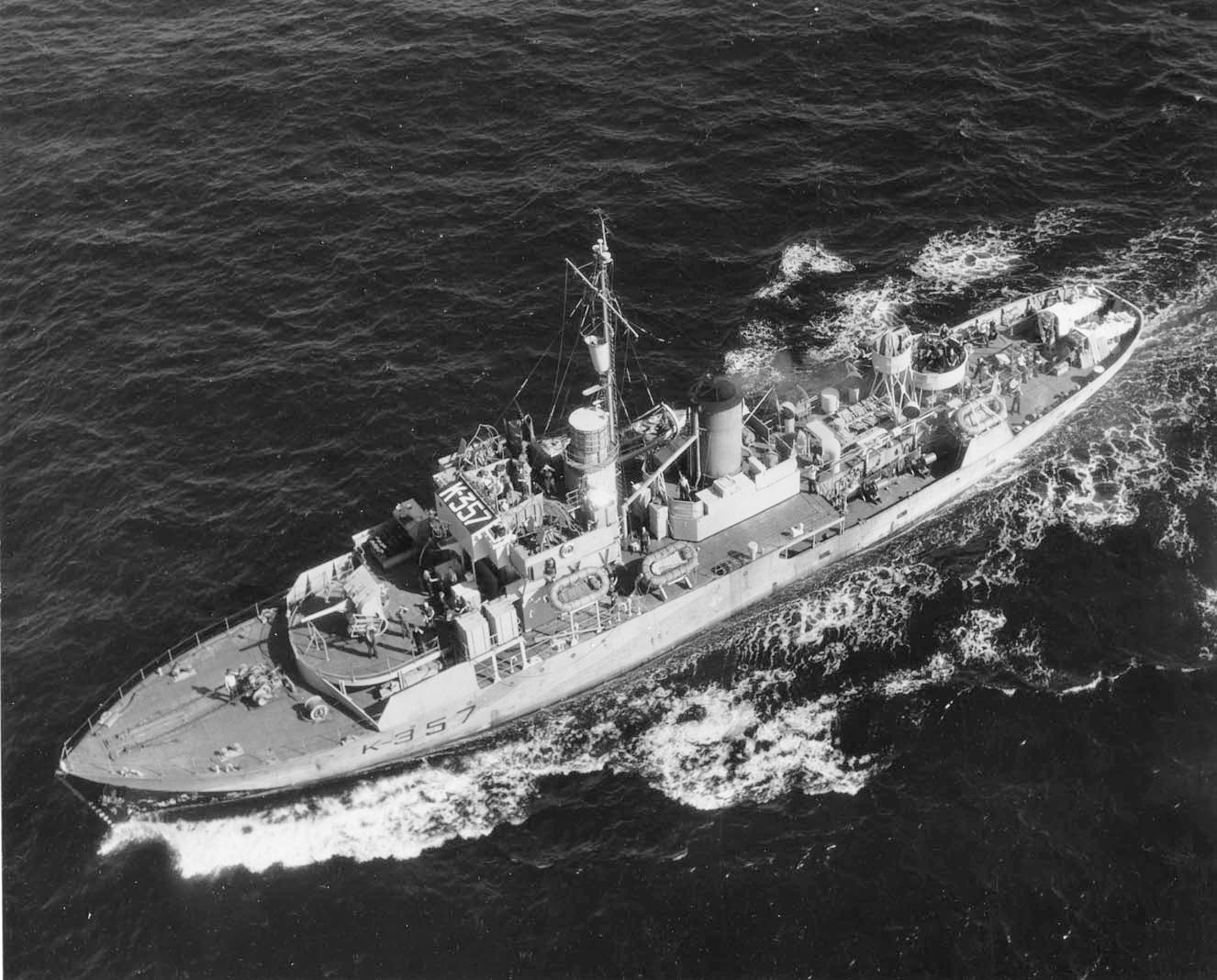
Flower Class Corvettes were built for coastal work. They were never intended too cross oceans, they rolled, were flat out at 18 knots and were not weather proof, originally built for a crew of 50 most were carrying over 80 by the end of the war. Cramped, Cold, Wet, poor food, uncomfortable to the extent some people never got over their seasickness, they were a miserable place to be.
300 were built . 22 were torpedoed by Germans but they sank 44 U-Boats. however it was not about scores, the real victory was how many merchant ships made it across the Atlantic thanks to these small ships, not how many U-boats never made it home..
There were two versions of the flower class, early and modified, identified by the mast being in front of the bridge or behind, this will be build of the later one below with the mast behind and roughly 200ft long and 1000 tons.;.
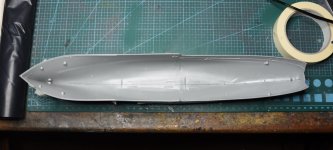
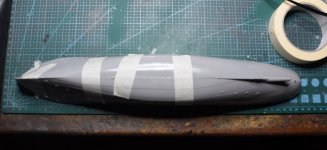
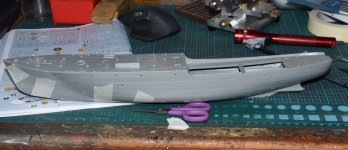
All i have done at this stage is tape things together to make sure the basics fit. This is just 4 parts but but i need to get this right, straight and true as its the foundations of the whole build.
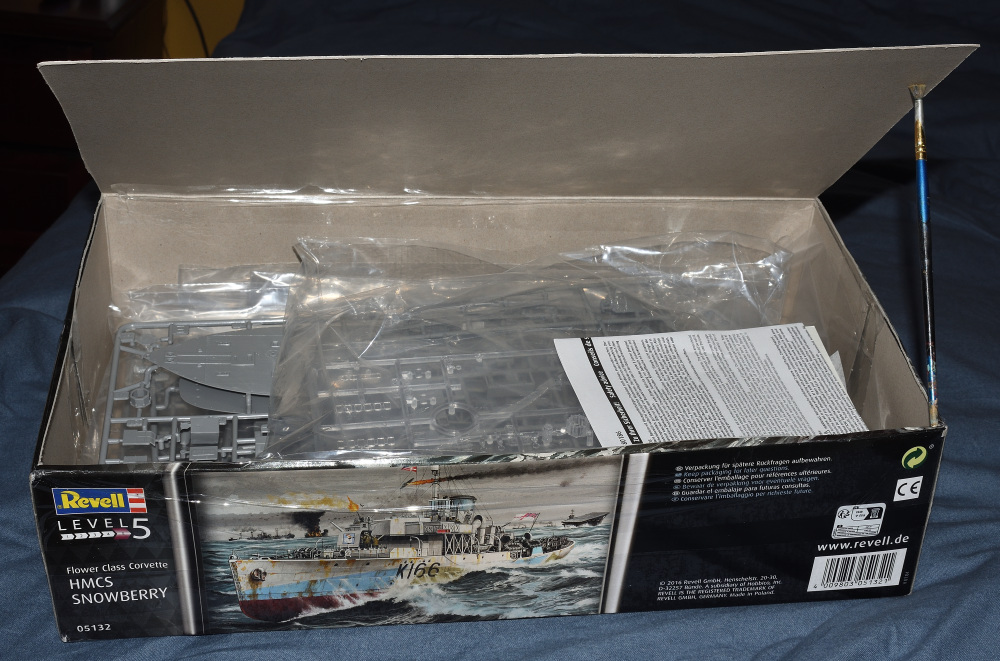
One other pet hate of mine is Revell boxes so the first job was to convert it to a top opener so you can find parts without having to tip them out all over the place
. I have to admit i know nothing about ships other than the basics you pick up on in life so all i can do is apply general modeling principles and steal other peoples ideas from the millions of builds on the Web .My biggest problem will be the scale, i like to add nuts and bolts and wiring to a 1/12 car, its hard to see what i can add to this kit other than PE. Normally i avoid PE on builds due to its two dimensional nature when i am building three dimensional models but in this scale PE could actually work quite well as 1/144 parts like ladders etc would appear flat anyway ?.
Would you believe I found a 12-minute documentary on WWII Ships railings on You tube
Railings on ships were mostly posts with wire strung between them and were called life lines. Vertical posts varied from i section castings and extrusions to just round steel posts. These posts were 1 inch dia and strung with either ¼” or ½” wire or chains. So the first problem is the posts on the Snowberry would need to be .007” (7 thou) and the wire about 2.3 (thou). In terms of metric which most plastic and brass comes in that’s 0.2mm vertical strung with less than 0.1 of a mm. Bearing in mind the posts would need to be drilled to take the wire it’s hard to see how you could get the posts any smaller than the kit posts which look huge.
So that’s not going to happen.
The kit railings are 0.8mm or 115mm true scale ( 4.75 inch ) so nearly 5 times over size. I think in this tiny scale it’s going to be compromises all along the way which is a shame as I hate out of scale things where for example you have a porthole to scale and a railing above almost half the diameter of the porthole
I will wait and see what the PE looks like when it arrives later this week from Korea. I think I need to develop a completely new mode from my std 1/12 mode these days and build to create the right effect/impression, so things look right rather than are right.
Flower Class Corvettes were built for coastal work. They were never intended too cross oceans, they rolled, were flat out at 18 knots and were not weather proof, originally built for a crew of 50 most were carrying over 80 by the end of the war. Cramped, Cold, Wet, poor food, uncomfortable to the extent some people never got over their seasickness, they were a miserable place to be.
300 were built . 22 were torpedoed by Germans but they sank 44 U-Boats. however it was not about scores, the real victory was how many merchant ships made it across the Atlantic thanks to these small ships, not how many U-boats never made it home..
There were two versions of the flower class, early and modified, identified by the mast being in front of the bridge or behind, this will be build of the later one below with the mast behind and roughly 200ft long and 1000 tons.;.
All i have done at this stage is tape things together to make sure the basics fit. This is just 4 parts but but i need to get this right, straight and true as its the foundations of the whole build.
One other pet hate of mine is Revell boxes so the first job was to convert it to a top opener so you can find parts without having to tip them out all over the place


 With the era kits I have, it's time to get off me bloomin ars and learn it, so that's how I'm approaching it.


